
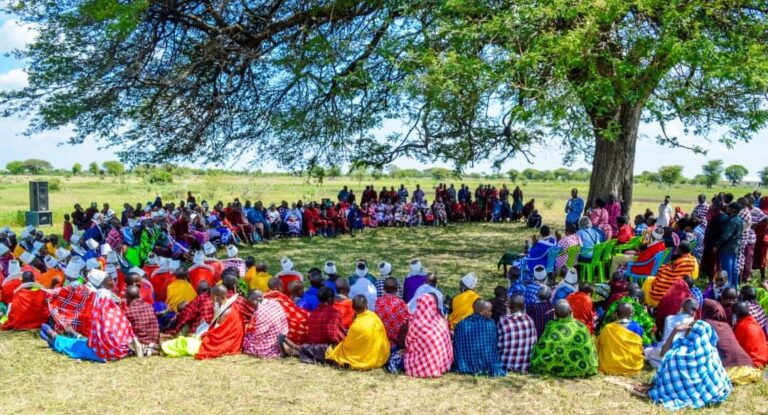
Create it; teach it: pass it on to others
Hello again from Tanzania. I have been thinking about the many different ways our work takes form today.
It all started very simply, really. Read below to see how the goals of those early days connect with Project work today.
With this newsletter, I wish to share our happiness in seeing our spirit and the structure of this work growing. Through the years it has been expressed in new and different forms, all with the power to improve lives.
With appreciation,
Twende!
Robert Lange
July 2026

The originating questions

Nearly two decades ago, our work started with these questions:
Can we provide an efficient stove that gets the smoke out and fits the Maasai women’s way of cooking in their small unventilated houses?
How can we achieve the goals of improved health and reducing the amount of wood required?
We dedicated ourselves to creating hopeful solutions to these challenges.
We identified the first homes to receive the stoves and installed them.
Our three-part work
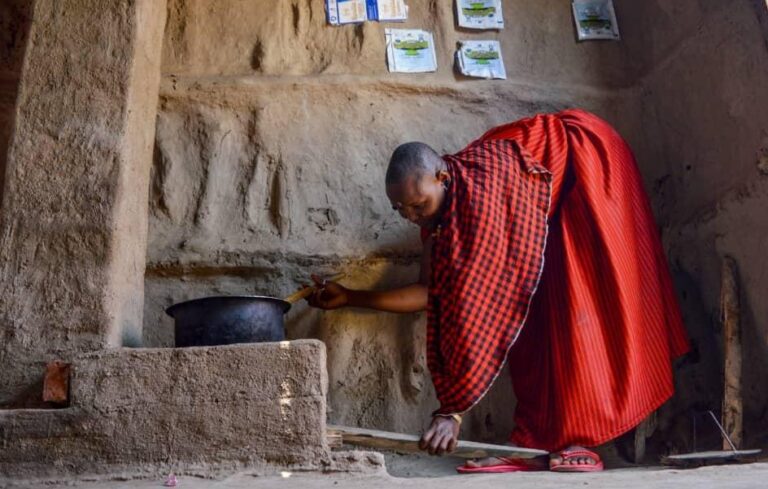
The structure of this work is straightforward:
- Choose the goal: the life improvement to achieve
- Identify the people to be served: the target
- Activate the people (actors) who can realize the goal for the target
Even when the program was in its simplest form, the identity of the targets and the actors was intermixed and complex. For example, some women who were the recipients of the stoves (targets) also took on the role of stove installers (actors).
From the beginning, the women helped to ensure that the stove design fit their needs and would actually improve their lives. Their collaboration increased the endurance and relevance of the entire Maasai Stoves & Solar Project.
So, while identities were fluid, the three parts stayed real: goal, target, actors.
Our work now takes many additional forms. These include new collaborations with Tanzanian comrades, who also lead the work. The impact grows here in this country and beyond. And our three-part approach continues to permeate the work throughout.
Maasai Stoves spreading to Rwanda

One of the most interesting examples of the transition and evolution of this work took place in Rwanda, where it continues today, totally independently.
Some years ago, my son Russell visited us in Tanzania. When he returned home to California, he gave a talk about the stoves and our work here.
Among the people in his audience were those interested in eye health in Rwanda. Listening to the talk, they realized our stoves helped women avoid severe eye irritation from smoke.
At their invitation, we went to Rwanda to demonstrate the stove. As a result, a Rwandan eye health program set up their own firebox manufacturing.
Having followed our stove redesign process, they now manufacture a very good version of our Model Four firebox, pictured above. The Rwanda project shows that our stove-based life improvement effort is complete, and can be implemented by others as a successful independent initiative.
Adaptation and expansion through Restore
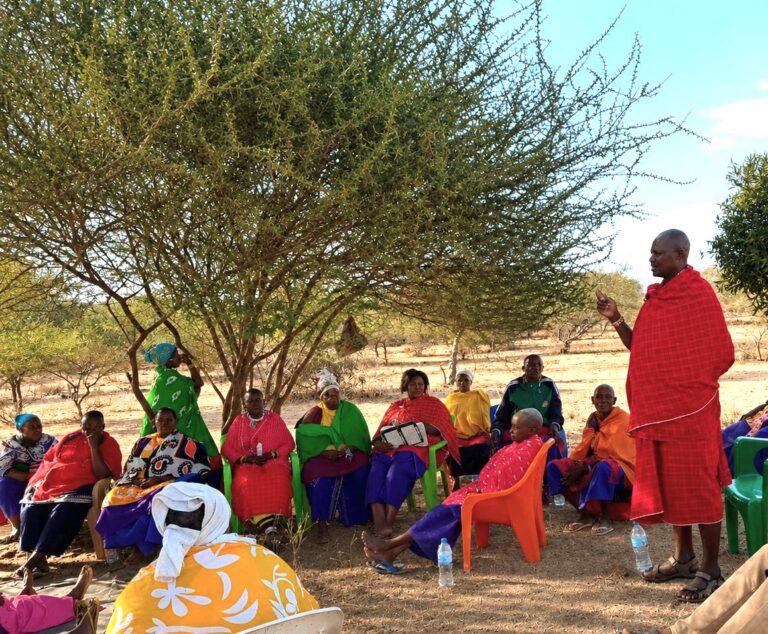
We are very proud and excited about another way our work has manifested in a new form, while integrating the same three-part approach.
Early this year, I wrote to you about the beginning of our work with the Restore Project.
The Restore Project combines good implementation with innovative training. The German Seventh Day Adventists use funds from the German Government to pass money on to us to support their Project. Here is how the Restore Project collaboration works:
- The goal is to replace open fires in homes with stoves, and to electrify with single-home solar systems
- The target is homes in eight villages that the Restore Project has prioritized in Monduli and Babati districts
- The actors, the implementors, are a wonderful combination of our strongest supervising staff with a team of new participants who have become expert solar installers
Instead of International Collaborative providing hands-on installation for the new villages, the Restore Project asked us to organize a training program to develop these valuable skills for new people. For me, this demonstrates a very welcome adaptation and expansion of the work.
A great collaborative event
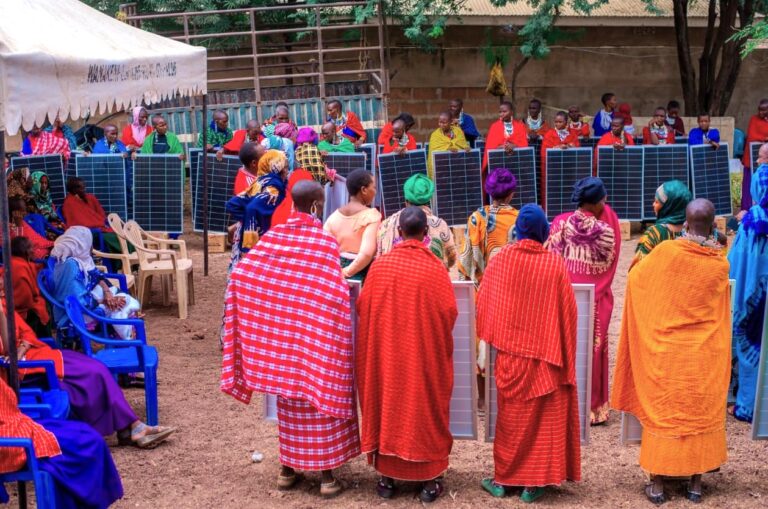
Together with Restore, we recently held a special event attended by seventy women at our Fodder Factory in Kigongoni. They came from four villages in the Monduli District that are part of the Restore implementation.
Each woman received solar equipment to take home for installation by the newly-trained experts and International Collaborative supervisors. The installers are ready to add electrification to the women’s homes where the new stoves were recently installed.
We are impressed
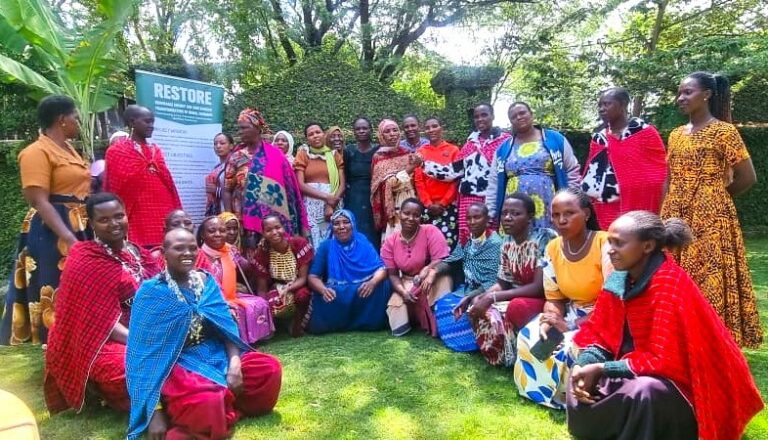
We are impressed and proud of what others are able to do, expanding on our work. We are happy to see our ideas, innovations, and home and health improvements spreading. The basic idea is clear: the freedom and creativity of others is powerful and so very welcome.
Create it, teach it, use it, share it, and pass it on to others. Collaborating with you gives us the power to do this. Thank you!
Your generosity benefits the entire community
All this is possible because of your generosity and collaborative spirit

For your $50 gift, a family settlement receives 200 trees to plant.
Help get the smoke out! Your $160 gift means a mom and her kids will breathe better in their homes.
Contribute $1400 to install a micro-electric grid for an entire settlement.